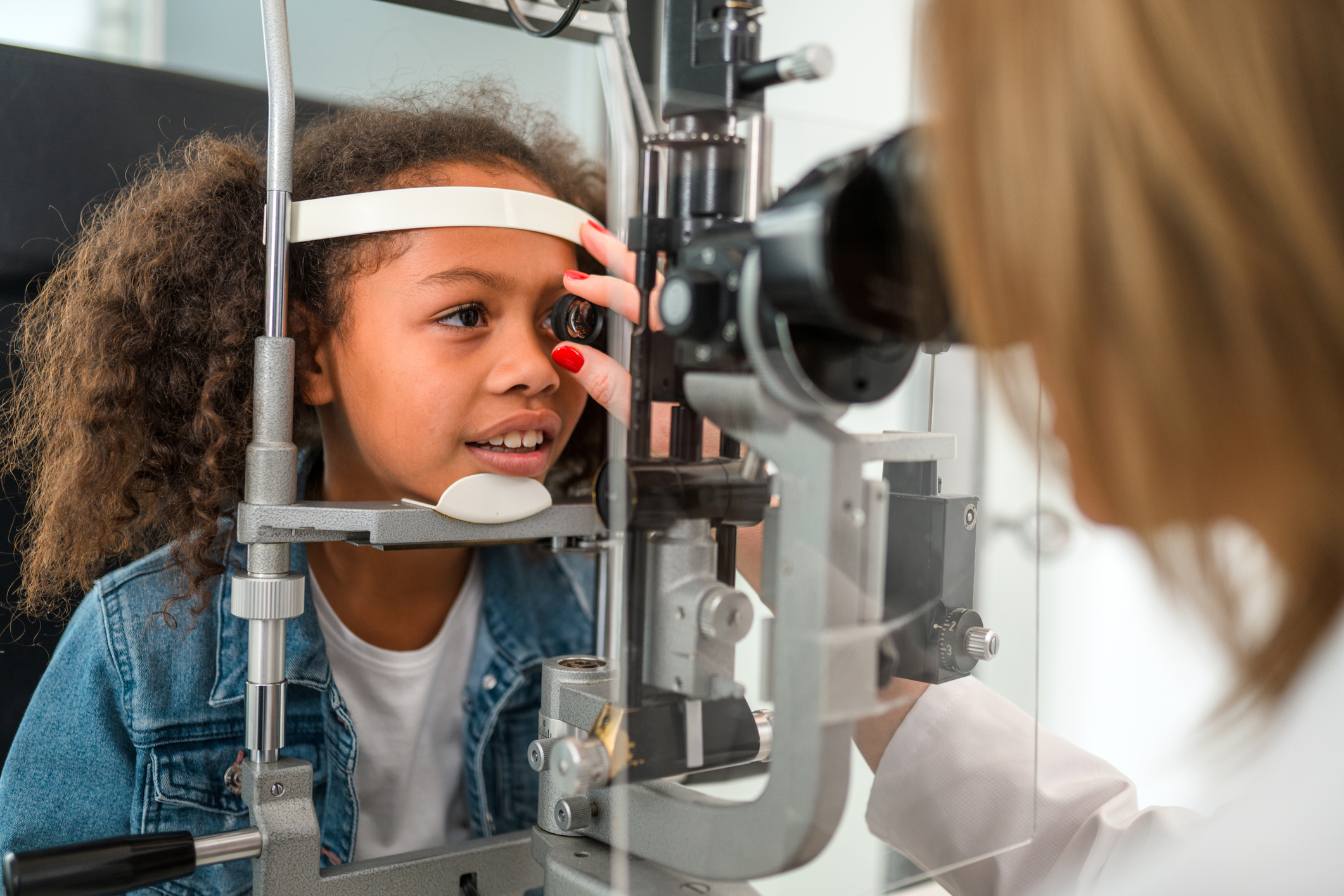
As a society, we invest heavily in the future of our children—providing them with quality education, nurturing their social development, and safeguarding their physical health. Yet, one essential aspect of a child’s well-being remains too often overlooked: their vision. Poor vision, undetected in childhood, can severely impact not only academic performance but also emotional and social development. Comprehensive eye exams, provided by doctors of optometry, are not just medical necessities—they are essential tools for unlocking each child’s full potential.
Myopia: A Growing and Urgent Epidemic
One of the most pressing and under-recognized threats to children’s vision today is myopia, or nearsightedness. Once considered a minor condition, myopia has reached epidemic levels in the United States. Rates have more than doubled in recent decades. In fact, the American Academy of Ophthalmology estimates that by 2050, nearly 50% of the global population will be myopic, up from just 23% in 2000. Children are developing myopia earlier, and at higher rates, increasing the risk of more severe vision impairment in adulthood.
Undiagnosed and untreated, myopia can impair a child’s ability to engage in the classroom, participate in physical activities, and maintain healthy social relationships. It can also lead to serious, lifelong eye health issues including retinal detachment, glaucoma, and macular degeneration if left unaddressed.
To combat this trend, HCAPS—the Health Care Alliance for Patient Safety—is launching a national Myopia Week of Action to raise awareness of the condition’s impact and advocate for timely intervention. During this week, HCAPS will work with educators, doctors, parents, and policymakers nationwide to elevate the conversation around children's vision health and promote access to comprehensive eye exams.
“We cannot allow preventable vision issues like myopia to become a barrier to children’s success in the classroom or in life,” said Dr. David Cockrell, Chairman of HCAPS. “Every child deserves the chance to see clearly, and that starts with a comprehensive eye exam by a doctor of optometry or ophthalmology. Through our Myopia Week of Action, we’re urging communities across the country to prioritize early detection and proactive care.”
Vision Problems Are More Common Than We Think
According to the Centers for Disease Control and Prevention (CDC), approximately 1 in 4 school-aged children has a vision disorder, and more than 60% of children with learning difficulties have undiagnosed vision problems. Despite these alarming statistics, far too many children—especially in underserved communities—lack access to routine, comprehensive eye care.
From difficulty seeing the whiteboard to struggling with hand-eye coordination, untreated vision issues can manifest in many ways. These challenges are often mistaken for behavioral or learning problems, leading to delayed interventions and lost educational opportunities.
The Link Between Vision and Learning
Vision is central to nearly every aspect of learning. Children with uncorrected vision problems may struggle to read, write, or recognize letters and numbers. Conditions like amblyopia (lazy eye), strabismus (crossed eyes), or myopia often go unnoticed because children may not realize they’re seeing differently—or lack the words to explain it.
Comprehensive eye exams provided by doctors of optometry go far beyond basic screenings. They assess the full visual system and can detect common refractive errors as well as eye health issues. These exams can even identify more than 230 systemic health conditions, including diabetes, hypertension, and multiple forms of cancer—underscoring their value as a powerful diagnostic tool beyond just vision correction.
Early Detection, Lifelong Impact
When vision problems are identified early, effective treatment can begin immediately—whether it involves prescribing glasses, vision therapy, or medical follow-up. This not only improves a child’s quality of life but also dramatically increases their chances for academic and developmental success.
The American Academy of Pediatrics recommends regular vision screenings starting at age 3, yet most states lack policies requiring comprehensive eye exams before school entry. This leaves too many children falling through the cracks—especially those in communities with limited access to pediatric eye care.
A National Call to Action
We must do more. Legislation like the Early Detection of Vision Impairments in Children Act (H.R. 8400) is a step in the right direction, calling for expanded funding and implementation of early vision screenings. But policy alone is not enough. Public education, access to care, and inter-professional collaboration are equally critical.
That’s why HCAPS is calling on policymakers, health care leaders, teachers, and parents to work together to make comprehensive vision assessments a foundational part of every child’s health and education journey.
A Brighter Future for Every Child
When we catch vision problems early, we give children the ability to fully engage in the world around them—to learn, play, and grow without limitation. Vision care is not a luxury—it is a basic necessity for every child’s success.
Let’s make childhood vision assessments a priority. With leadership from organizations like HCAPS, and through initiatives such as the Myopia Week of Action, we have the opportunity to change the trajectory for millions of children. Because when kids can see clearly, they can achieve anything.